


 Cart
Cart
 sales@molnova.com



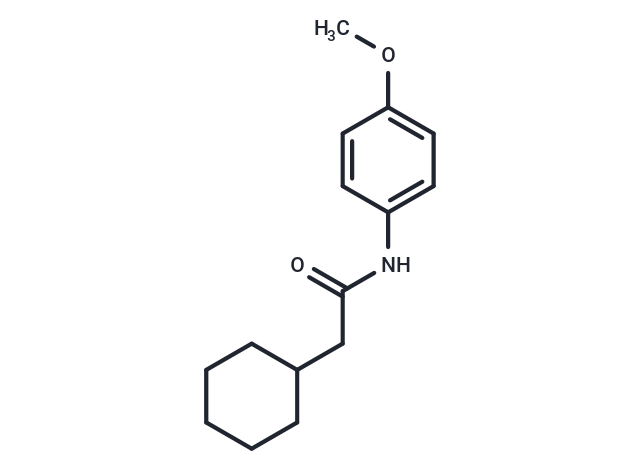
sEH inhibitor-7
CAS No. 340221-20-7
sEH inhibitor-7( —— )
Catalog No. M35406 CAS No. 340221-20-7
sEH inhibitor-7 is a soluble epoxide hydrolase (sEH) inhibitor that inhibits sEH in human and mouse with IC 50 s of 6.2 μM and 0.15 μM, respectively. sEH inhibitor-7 is associated with anti-inflammatory active molecules.
Purity : >98% (HPLC)
 COA
Datasheet
HNMR
HPLC
MSDS
Handing Instructions
COA
Datasheet
HNMR
HPLC
MSDS
Handing Instructions
| Size | Price / USD | Stock | Quantity |
| 5MG | 45 | Get Quote |


|
| 10MG | 76 | Get Quote |
|
| 25MG | 150 | Get Quote |
|
| 50MG | 227 | Get Quote |
|
| 100MG | 335 | Get Quote |
|
| 500MG | 782 | Get Quote |
|
| 1G | Get Quote | Get Quote |
|
Biological Information
-
Product NamesEH inhibitor-7
-
NoteResearch use only, not for human use.
-
Brief DescriptionsEH inhibitor-7 is a soluble epoxide hydrolase (sEH) inhibitor that inhibits sEH in human and mouse with IC 50 s of 6.2 μM and 0.15 μM, respectively. sEH inhibitor-7 is associated with anti-inflammatory active molecules.
-
DescriptionsEH inhibitor-7 (compound c-2) is an inhibitor of soluble epoxide hydrolase (sEH) with IC50s of 0.15 μM (mouse sEH) and 6.2 μM (human sEH), respectively. soluble epoxide hydrolase (sEH) plays an important role in the metabolism of endogenous chemical mediators involved in the regulation of blood pressure and inflammation.
-
In Vitro——
-
In Vivo——
-
Synonyms——
-
PathwayOthers
-
TargetOther Targets
-
RecptorEpoxide Hydrolase
-
Research Area——
-
Indication——
Chemical Information
-
CAS Number340221-20-7
-
Formula Weight247.33
-
Molecular FormulaC15H21NO2
-
Purity>98% (HPLC)
-
SolubilityIn Vitro:?DMSO : 100 mg/mL (404.32 mM; Ultrasonic (<60°C)
-
SMILESCOc1ccc(NC(=O)CC2CCCCC2)cc1
-
Chemical Name——
Shipping & Storage Information
-
Storage(-20℃)
-
ShippingWith Ice Pack
-
Stability≥ 2 years
Reference
1. Kim IH, et al. Optimization of amide-based inhibitors of soluble epoxide hydrolase with improved water solubility. J Med Chem. 2005 May 19;48(10):3621-9. ?
molnova catalog



related products
-
Yunaconitine
Yunaconitine inhibited the increased vascular permeability caused byacetic acid and histamine, the leucocyte migratory response induced by injection of 1 % carrageenin .1 ml in rat's thoracic cavity.
-
4-O-Methylhonokiol
4-O-Methyl honokiol, a natural neolignan isolated from Magnolia officinalis, acts as a PPARγ agonist and inhibits NF-κB activity, used for cancer and inflammation research.
-
Protein Kinase C Pep...
Protein Kinase C Peptide Substrate targets specific cell spacers ina manner that is dependent on second messengers and specific adaptor proteins in response to extracellular signals that activate g protein-coupled receptors, tyrosine Kinase receptors, or tyrosine kinase-coupled receptors.
